

What Is the Transfer Disclosure Statement and Why Does It Matter for San Diego Buyers?
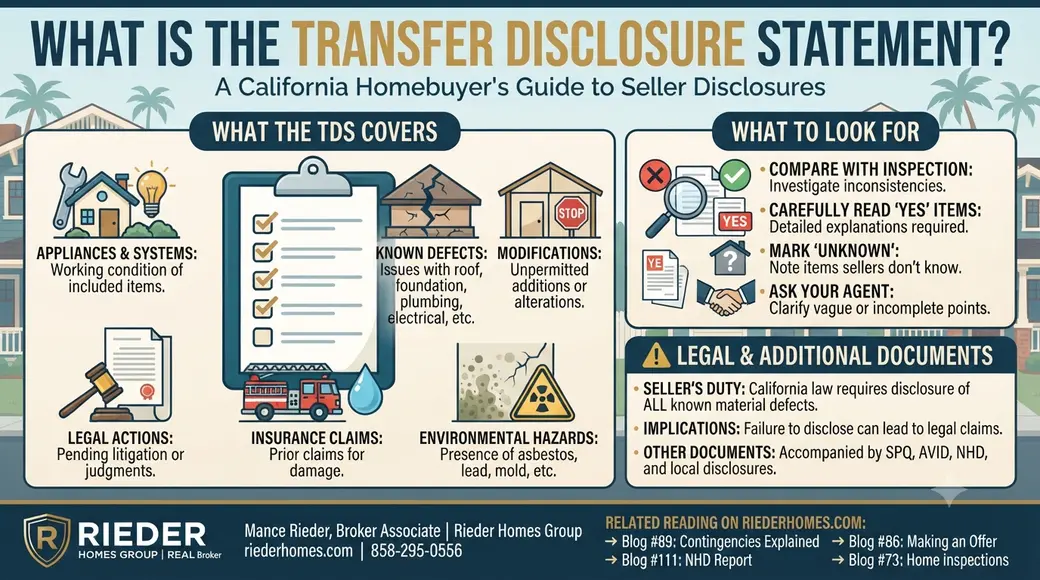
What Is the Transfer Disclosure Statement?
The Transfer Disclosure Statement (TDS) is the primary seller disclosure document required in virtually all California residential real estate transactions. The seller completes the TDS to disclose their knowledge of the property's condition — including known defects, repairs, neighborhood conditions, and other material facts that would affect a buyer's decision.
What the TDS Covers
- Appliances and systems: Which appliances and mechanical systems are included and in working condition
- Known defects: Any known issues with the roof, foundation, plumbing, electrical, or HVAC
- Room additions or modifications: Unpermitted improvements or alterations to the original structure
- Neighborhood conditions: Nearby nuisances — industrial facilities, airports, military activity
- Legal actions: Pending litigation, judgments, or enforcement actions related to the property
- Insurance claims: Prior claims for fire, flood, earthquake, or other damage
- Environmental hazards: Known presence of asbestos, lead paint, mold, or underground storage tanks
What to Look for When Reviewing the TDS
- Any items checked 'Yes' require detailed explanation — read every explanation carefully
- Compare TDS disclosures against your inspection report findings — any inconsistencies are worth investigating
- Note anything marked unknown — the seller may not have full knowledge of older systems
- Ask your agent about anything that seems incomplete, vague, or contradicted by what you observed during showings
The TDS Is Not the Only Disclosure Document
The TDS is typically accompanied by the Seller Property Questionnaire (SPQ), which goes into even greater detail on specific property conditions. Other disclosure documents include the Agent Visual Inspection Disclosure (AVID), Natural Hazard Disclosure report, and any local disclosure forms required by the city or county of San Diego.
Legal Implications of Non-Disclosure
California law requires sellers to disclose all known material defects. If a seller fails to disclose a known material issue on the TDS and you discover it after closing, you may have legal grounds for a claim. Rieder Homes Group reviews disclosure documents with every buyer we represent to identify any concerns before contingency removal.
Related Reading on RiederHomes.com:
→ Blog #89: Contingencies Explained
→ Blog #111: NHD Report
→ Blog #86: Making an Offer
→ Blog #73: Home Inspections
— Mance Rieder, Broker Associate | Rieder Homes Group | REAL Broker | riederhomes.com | 858-295-0556
Categories
- All Blogs (232)
- 55+ Community (1)
- Aging (1)
- Boosting Your Home's Value (5)
- Buying (116)
- downsizing (1)
- Family & Caregiving (1)
- Financial Planning (1)
- MCAS (1)
- Military Families (1)
- Miramar (1)
- Poway (1)
- Rancho Peñasquitos (1)
- San Diego Real Estate (1)
- Selling (99)
- Selling Your Home (1)
- single story home (1)
Recent Posts