
What Is Vesting and How Should I Take Title to My San Diego Home?
What Is Vesting?
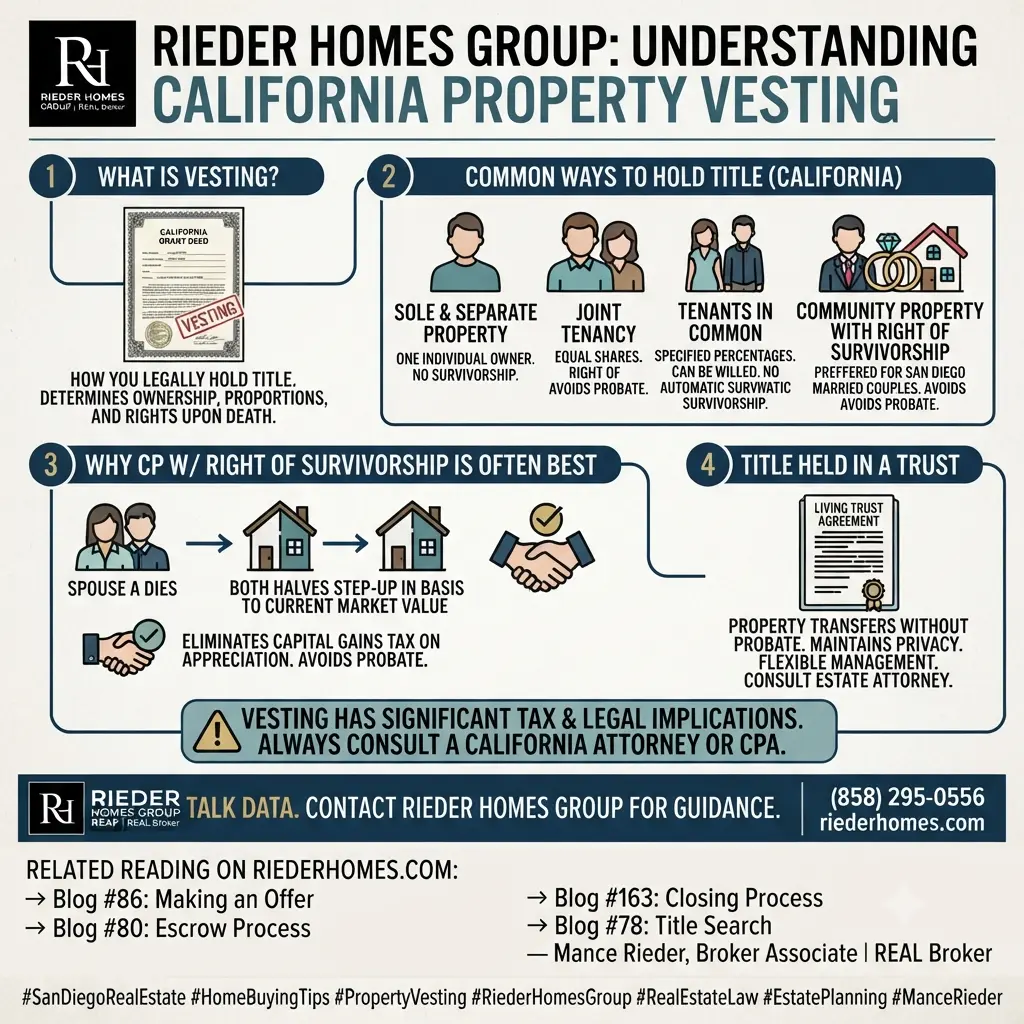
Vesting refers to how you legally hold title to your property — who owns it, in what proportions, and what happens to ownership rights if one owner dies. In California, there are several ways to hold title, each with different legal, tax, and estate planning implications. The vesting decision is made during escrow and recorded on the grant deed at closing.
Common Ways to Hold Title in California
- Sole and separate property: One individual owns the property entirely — used when a single person buys or when a married person uses separate property funds and wants to maintain separate ownership
- Joint tenancy: Two or more people each own an equal share with right of survivorship — when one owner dies, their share automatically passes to the surviving owner(s) without probate
- Tenants in common: Two or more people each own a specified percentage — each owner's share can be willed to their heirs with no automatic right of survivorship
- Community property with right of survivorship: Combines community property tax benefits with automatic survivorship — the preferred holding for most San Diego married couples
Why Community Property With Right of Survivorship Is Often Best for Married Buyers
California's community property rules provide a significant tax advantage: when one spouse dies, both halves of community property receive a full step-up in cost basis to current market value — eliminating capital gains tax on all appreciation during the marriage. Adding right of survivorship allows the surviving spouse to receive this benefit while avoiding probate.
Title Held in a Trust
Many San Diego buyers — particularly those with estate planning needs — hold title in a living revocable trust. Title in trust allows the property to transfer at death without probate, maintains privacy, and provides management flexibility during incapacity. If you already have a trust, consult your estate attorney about vesting the property in trust at purchase.
Consult an Attorney for Your Specific Situation
The right vesting depends on your marital status, estate plan, tax situation, and co-ownership structure. Rieder Homes Group always recommends buyers consult a California estate attorney or CPA before finalizing their vesting decision — particularly for high-value San Diego properties where the tax and estate implications are significant.
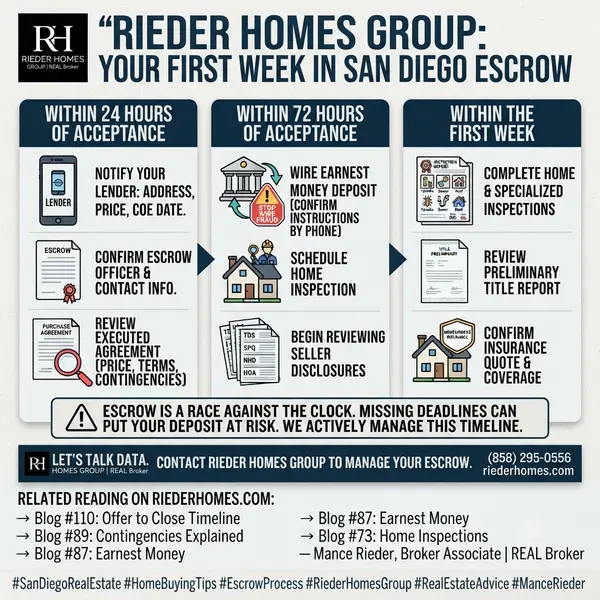
Related Reading on RiederHomes.com:
→ Blog #86: Making an Offer
→ Blog #80: Escrow Process
→ Blog #163: Closing Process for Buyers
→ Blog #78: Title Search
— Mance Rieder, Broker Associate | Rieder Homes Group | REAL Broker | riederhomes.com | 858-295-0556
Categories
- All Blogs (202)
- 55+ Community (1)
- Aging (1)
- Boosting Your Home's Value (3)
- Buying (116)
- downsizing (1)
- Family & Caregiving (1)
- Financial Planning (1)
- MCAS (1)
- Military Families (1)
- Miramar (1)
- Poway (1)
- Rancho Peñasquitos (1)
- San Diego Real Estate (1)
- Selling (71)
- Selling Your Home (1)
- single story home (1)
Recent Posts